Please take a few seconds to tell us a little about yourself:
Gender:
Age:
How would you describe your Jewish religious affiliation?
About how frequently, if at all, do you participate in Jewish life through Jewish organizations?

Haroset

Recipes from around the world for the "mortar" of the seder plate

  • Bookmark and Share
  • From The Book of Jewish Food, published by Alfred A. Knopf, Inc. Reprinted with permission.

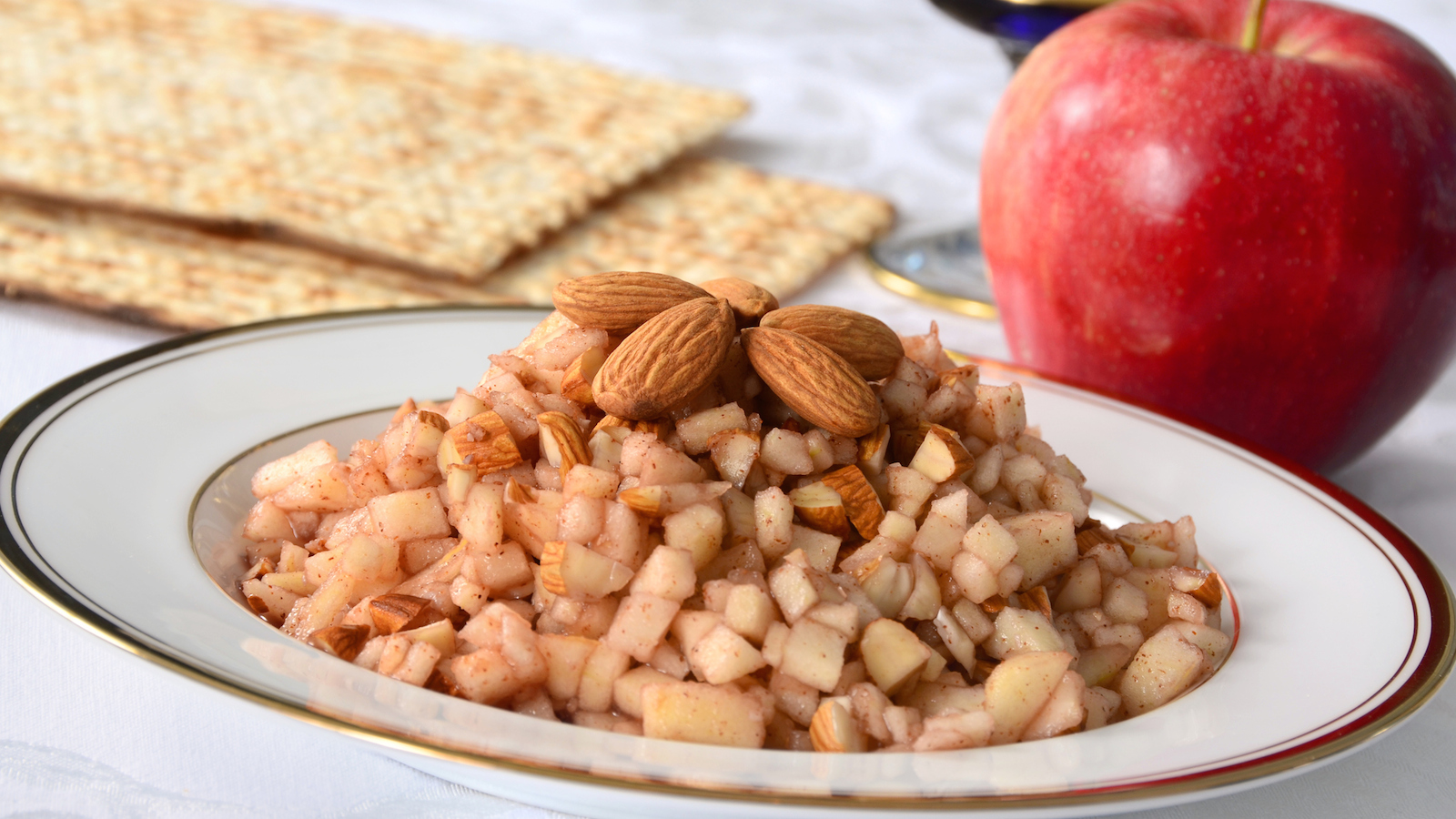
    Ashkenazi Haroset

    On the Passover seder plate, haroset symbolizes the mortar used by slaves in Egypt. These are the classic Eastern European ingredients. Only the proportions vary.

    2 medium-sized tart apples

    1/2 cup (50 g) walnuts, chopped

    1/2 - 1 teaspoon cinnamon

    2 - 3 tablespoons sweet red wine

    1 tablespoon sugar or honey or to taste

    Peel, core, and finely chop or grate the apples. Mix with the rest of the ingredients.

    Haroset from Turkey

    2 sweet apples weighing 1/2 lb (250 g), peeled and cut into small pieces

    1/2 lb (250 g) dates, pitted

    1 cup (150 g) raisins

    Juice and grated zest of 1 orange

    1 cup (250 ml) sweet red Passover wine

    2 - 4 tablespoons sugar or to taste (optional)

    2 oz (60 g) walnuts, coarsely chopped

    Put all the ingredients except the sugar and the walnuts together in a saucepan and cook on very low heat until the mixture is soft and mushy and the liquid is reduced, stirring occasionally. Add sugar to taste. The amount will depend on the sweetness of the other ingredients. Blend to a paste in the food processor. Pour into a bowl and sprinkle with walnuts.

    Haroset from Egypt

    1/2 lb (250 g) pitted dates, chopped

    1/2 lb (250 g) large yellow raisins or sultanas

    1/2 cup (125 ml) sweet red Passover wine

    1/2 cup (60 g) walnuts coarsely chopped

    Put the dates and sultanas with the wine in a pan. Add just a little water to cover. Cook on very low heat, stirring occasionally, until the dates fall apart into a mush. Cook until it thickens to a soft paste. Pour into a bowl and sprinkle with walnuts.

    Haroset from Morocco

    1 lb (500 g) dates, pitted and chopped

    1-1/2 cups sweet red Passover wine

    1 teaspoon ground cinnamon

    1/2 teaspoon ground cloves

    1 cup (125 g) walnuts, coarsely chopped

    Put the dates into a pan with the wine, cinnamon, and cloves and simmer, stirring occasionally, until you have a soft paste. Put through the food processor if you want a smoother texture. Let it cool and stir in the walnuts.

    VARIATION

    A Libyan version is flavored with ground ginger, nutmeg, and cloves -- 1/4 teaspoon of each.

    Haroset from Italy

    In Italy there are various regional versions of haroset. The haroset of Padua has prunes, raisins, dates, walnuts, apples, and chestnuts. In Milan they make it with apples, pears, dates, almonds, bananas, and orange juice. The following is a general version.

    3 apples, sweet or tart

    2 pears

    2 cups sweet wine

    1/3 cup (50 g) pine nuts

    2/3 cup (50 g) ground almonds

    1/2 lb (250 g) dates, pitted and chopped

    3/4 cup (100 g) yellow raisins or sultanas

    4 oz (100 g) prunes, pitted and chopped

    1/2 cup (100 g) sugar or honey or to taste

    1 teaspoon cinnamon

    1/2 teaspoon ground ginger

    Peel and core the apples and pears and cut them in small pieces. Put all the ingredients into a pan together and cook, stirring occasionally, for about one hour, until the fruits are very soft, adding a little water if it becomes too dry.

    VARIATIONS

    Other possible additions: chopped lemon or candied orange peel, walnuts, pistachios, dried figs, orange or lemon juice, ginger, nutmeg, and cloves.

    Piedmontese Haroset

    This recipe is adapted from one sent by Nedelia Tedeschi, of Turin. She enclosed a little picture of a squirrel eating a chestnut, from the package of dried chestnuts she uses to make the paste. It was Passover, and the Italian store near my house had closed, so when I phoned around to try to find dried chestnuts and couldn't, I used cooked vacuum-packed ones instead. The result was very unusual and also delightful.

    1/2 lb (250 g) cooked chestnuts

    2/3 cup (125 g) blanched almonds

    2 hard-boiled egg yolks

    Grated zest of 1 orange

    Juice of 1 orange

    About 3/4 cup (175 ms) sweet red kosher wine

    1/3 cup (75 g) sugar or more to taste

    Boil the chestnuts for a minute or two, and drain. Grind the almonds fine in the food processor, then add the rest of the ingredients, including the chestnuts, and blend to a paste.

    Claudia Roden

    Claudia Roden is one of England?s leading food writers. Her works include the James Beard Award?winning The Book of Jewish Food and A Book of Middle Eastern Food.