How to Make Your Own Lox
The classic Jewish brunch food is more affordable -- and surprisingly easy -- when you make it at home.
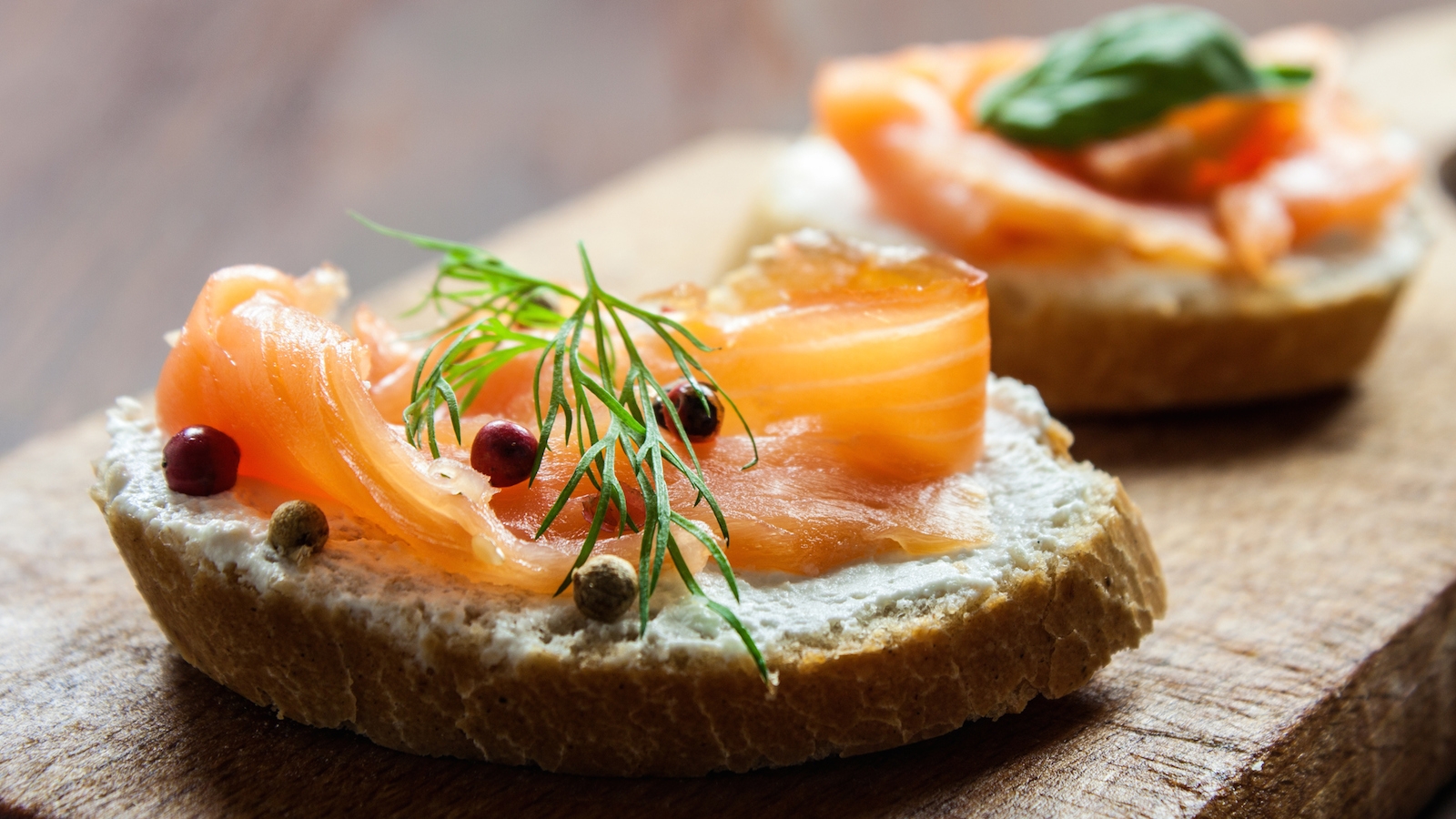
For many American Jews and for many Americans in general, lox is the luscious topping to their Sunday morning bagel and schmear (generous serving of cream cheese).
Lox is always made from salmon and is very expensive. In this regard, it is different from many other iconic Jewish foods, like gefilte fish and herring, which are made from ingredients that are easy to acquire and cheap — an important consideration for historically poor Jewish communities.
Lox vs. Smoked Salmon
While lox may be delicious, the term is quite confusing — what we now call lox, derived from the German word for salmon (lachs), is in fact smoked salmon. True lox is brined in a salty solution, which cures the fish, but also leaves a strong, salty taste. Today, lox is cured with a light salting and then cold-smoked, which provides the typical “Nova” smoked salmon flavor. The word lox is now used interchangeably with smoked salmon, and the most popular Sunday-morning item sold at Zabar’s in New York City — over 2,500 pounds per week–is not real lox actually, but smoked salmon.
Unfortunately, lox has become an even more complicated issue with current fishing trends. As wild salmon becomes increasingly scarce, the use of salmon farming has increased dramatically. Over 80 percent of salmon sold in the United States comes from farms, which raises health and sustainability issues, as documented in this 2003 article in the New York Times, “Farmed Salmon Looking Less Rosy.”
DIY Lox
However, it is now easy, while still not cheap, to purchase sustainable, wild-caught salmon at specialty stores, or at Trader Joe’s and Whole Foods. Though you’ll spend on the fish, you can save money by learning to cure it yourself.
The easiest way to make homemade lox is to follow the Scandinavian form of Gravlax, which is cured salmon in a salt-sugar solution. This process skips the smoking step, an unrealistic task for most home cooks.
Follow this recipe and in just a few days you can enjoy delicious lox that you made yourself. Start the fish Thursday and by lunch on Shabbat you will have the perfect showpiece for your Shabbat table — or better yet, wait one more day for the perfect Sunday brunch. This is also a popular dish to serve at a Yom Kippur break fast.
Ingredients
1 cup kosher salt
1 1/2 – 2 lbs salmon filet, boneless, with the skin on
1 cup sugar
1/2 bunch dill, stemmed and leaves washed
Directions
Rinse salmon filet and make sure all pin bones are removed. To do this, take small pliers or tweezers and pull the small bones out in the same direction they face. There are pin bones more often in wild salmon than in farmed salmon.
Cut the salmon in half, to make two equal-sized pieces.
Mix the salt and sugar in a bowl. On a plate or in a shallow dish, pile half of the mixture onto each half of the salmon. It will seem like there is extra mixture, but just pile it on. The salmon will absorb the mixture during the curing process. Next, place the dill on top. Sandwich the two pieces of fish together and wrap tightly with plastic wrap.
Place the fish into a gallon-sized Ziploc bag and push out all of the air. Now place in a shallow dish, such as a Pyrex baking dish.
Refrigerate, with weights on top, which is crucial. Use another heavy dish, bottles of wine–anything to weigh down the fish.
The lox will take 2-3 days to cure. At the end of each day, drain any liquid that has been extracted from the salmon and flip the salmon over, so that both sides are evenly weighed down. You can begin tasting it after 2 days. When it is cured to the desired taste, remove fish from plastic and rinse well.
To eat, slice thin on a bias, leaving the skin behind. Eat with your favorite cream cheese and bagel, and enjoy.
The cured lox freezes very well. Simply wrap well in plastic and place in a freezer bag to keep.
Next time, you can change the flavor–make it Mexican with chili powder and limes; Greek with lemon and oregano; Israeli with zaatar… the possibilities are limitless!
Shabbat
Pronounced: shuh-BAHT or shah-BAHT, Origin: Hebrew, the Sabbath, from sundown Friday to sundown Saturday.
Yom Kippur
Pronounced: yohm KIPP-er, also yohm kee-PORE, Origin: Hebrew, The Day of Atonement, the holiest day on the Jewish calendar and, with Rosh Hashanah, one of the High Holidays.