Mamaliga: Romanian Polenta, Served with Black Beans
Romania's versatile cornmeal dish.
As a self-described Italian food lover, I have eaten my share of polenta–soft and porridge-like with sweet roasted tomatoes and goat cheese, or hardened, sliced into squares and served as a side dish for just about everything. So I was surprised, and a bit confused, when my friend Julie invited me over for a traditional Romanian dish called mamaliga, only to serve me a steaming bowl of polenta.Turns out, polenta and mamaliga are nearly one and the same. As Claudia Roden writes in The Book of Jewish Food, “Corn came to Europe from the New World — in the sixteenth century. Having arrived first in Venice, where it was used to make the porridge polenta, it was eventually grown in Eastern Europe, where it became known as ‘Turkish Wheat,'” and mamaliga (bread of gold) in Romania.
For the Love of Cornmeal
Just like the Italians, Romanians (both Jewish and non-Jewish) grew very fond of their cornmeal porridge–a dish that is at once filling, inexpensive and infused with the warmth of home and family. Jewish families particularly loved mamaliga because it could be made dairy or pareve, and was durable enough to be cooked a day ahead and served on Shabbat. By the 17th century, writes Gil Marks in The Encyclopedia of Jewish Food, Romanians had replaced grains like millet and barley, once favored in their diet, for cornmeal.
When Jewish Romanian immigrants arrived to America in the late 19th century, they brought their beloved mamaliga with them. For decades, writes Marks, “[It] was a staple of many impoverished tenement residents on Manhattan’s Lower East Side.” The dish was even made famous in the popular Yiddish song Roumania, Roumania, composed by singer Aaron Lebedeff in the 1920s:
“Dort tsu voynen iz a fargenign
vos dos harts glust dir vost kentsu krign
a mameligele, a pastramele, a karnatseleun a gleyzele vayn, aha!”
“To live there is a pleasure
What your heart desires you can get
A mamaliga, a pastrami, a karnatzl (sausage), and a glass of wine, aha!”
In Romania, mamaliga is typically served all day–with sour cream and jam for breakfast, sliced and served sandwich-style with onions, cheese and pickles for lunch, and used as the starchy base for meaty stews at dinner. Julie introduced me to the joys of topping mamaliga with spicy black beans, salsa, cheddar cheese and slices of avocado. While not exactly a traditional preparation, this quick and nourishing meal demonstrates how versatile and deeply satisfying this peasant dish can be.

Ingredients
1 teaspoon cumin powder
2 shallots, diced
2 Tablespoons olive oil
kosher salt
3 Tablespoons butter or margarine
1 1/2 cups water
1 1/2 cups milk
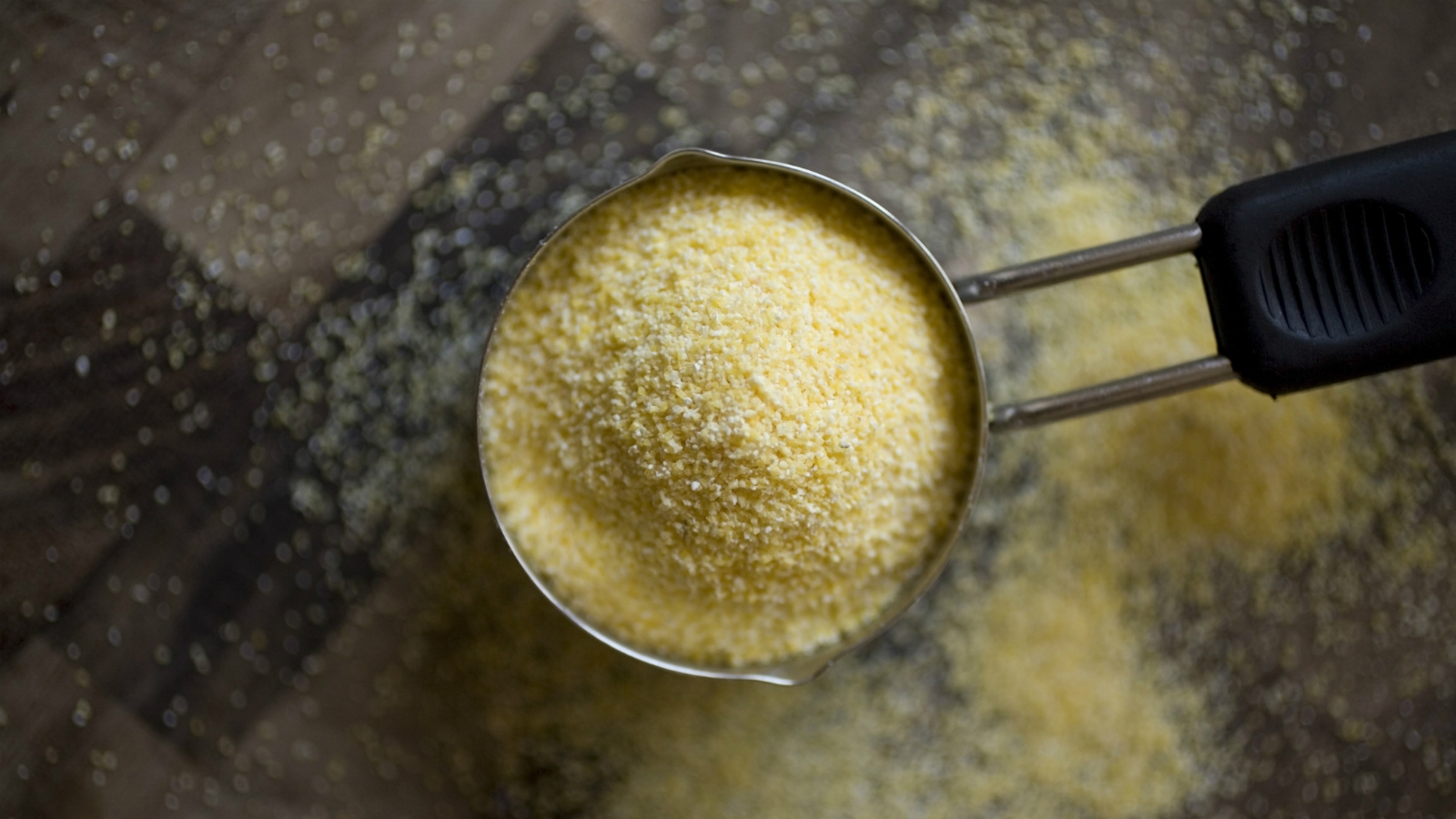
1 cup medium grind corn meal
2 cans black beans, rinsed and drained
1/4-1/2 cup vegetable broth
Juice of 1 lemon
salt
Directions
If you prefer to make this dish pareve, use all water instead of half water and half milk.
Whisk cornmeal together with 1 cup of milk in a medium bowl and set aside. Bring remaining milk and water to a boil in a medium pot. Turn heat down to low, add polenta mixture and cook, stirring constantly, until mixture thickens and begins to pull away slight from the sides of the pot, 7-10 minutes. Turn off heat; stir in butter and salt to taste. Ladle into bowls and serve hot.
To make beans: Heat oil in a medium pan over medium heat; add shallots and cook until brown, about 7 minutes. Stir in chili powder and cumin and let cook an additional 1-2 minutes until spices become fragrant.
Lower heat; add black beans and broth and cook, stirring occasionally, until mixture thickens slightly. Stir in limejuice, and season with salt to taste. Serve spooned over mamaliga, garnished with cheddar cheese, sour cream, salsa, and avocado slices.