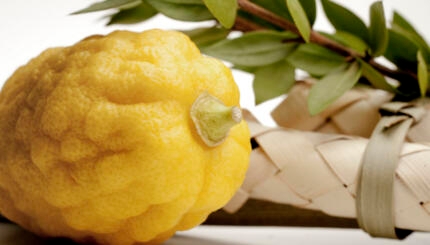
Sukkot, the “Festival of Tabernacles,” is one of Judaism’s three central pilgrimage festivals, along with Passover and Shavuot. Sukkot is celebrated by eating meals in a sukkah, a temporary structure built according to specific guidelines; waving the four species, the citron, date palm frond, myrtle, and willow; and rejoicing. This year, Sukkot begins at sundown on Friday, October 2 and continues for a week, culminating in the holidays of Shemini Atzeret and Simchat Torah. We’ve collected some of the best Sukkot-related classes, workshops, and home-based projects to help you prepare for the holiday and celebrate!
E-Torah in Motion
September 22 – October 1
Join Torah in Motion, a Jewish educational institution based in Toronto, Canada, for this Sukkot series with nine online events and classes.
Prayers for Rain: Sukkot, lulav, and Af-Bri – the angel of rain
September 22 7:00 p.m. – 8:00 p.m. PDT
Count yourself in. It takes ten for a minyan. It takes thousands of learners to keep Jewish learning free for everyone. Join them with a year-end gift. We can’t do it without you.
Join Adamah in exploring the rain cycle, the four water loving ecosystems represented by the lulav, the theological relationship between rain and dew, and Afbri – the mysterious angel of rain.
My Jewish Learning Sukkot Workshop
Tuesday, September 22 at 7:15 p.m. ET/4:15 p.m. PT
Learn more about the holiday of Sukkot in this session with Rabbi Buchwald of the National Jewish Outreach Program.
Erev Sukkot Festival in the Sukkah of Justice and Compassion
Friday, September 25 5:15 p.m. – 7:30 p.m.
Temple Israel of Boston presents a Sukkot gathering in the Sukkah of Justice and Compassion, featuring heartfelt prayer, festive food, and music. The evening includes a schmooze and festival meal, a festival service onsite and online, and a chance to learn how Tikkun Central is making an impact.
Erev Sukkot Prayer Service
Thursday, September 25, 2026 from 6:00p.m. ET – 7:00p.m.
Join New York’s Central Synagogue for a live streamed Erev Sukkot service.
The Saga of the Citron: Historical and Global Perspectives
Available now.
Join Schusterman Center for Israel Studies at Brandeis University to discover what the etrog, or citron, can reveal to us about larger historical trends.
Make Your Own Local Lulav with My Jewish Learning
Join Rabbi Shoshana Meira Friedman to learn how to create a lulav that helps reduce the climate impact of our ritual objects for Sukkot. She explores how making a local lulav is an act of ritual significance and ecological connection.
All is Fleeting: The Book of Ecclesiastes
Available now.
Join My Jewish Learning for this special Sukkot class on Kohelet, or Ecclesiastes, the biblical book that is read during Sukkot. Rabbi Sara Brandes leads an inspirational exploration of the main themes of the text, which offer timeless wisdom during these unusual times.
Sukkot, Shemini Atzeret, and the Joy of Rain
Available now.
Join My Jewish Learning’s special class led by Sarah Chandler. In ancient times, Sukkot opened with a water-drawing ritual which symbolized faith that the coming year’s rains would fall just in time. On Shemini Atzeret, we mark the beginning of the daily prayer for rain with a special prayer. How can these rituals inform contemporary Jews’ relationship to rain?
Shaking the Lulav and Etrog
Available now.
Head to My Jewish Learning’s YouTube page to hear Dafna Siegman explain the four species and shake the lulav and etrog under her Jerusalem Sukkah!
Sukkot on Sefaria
Available now.
Sefaria is an open source online library of Jewish texts. Browse through traditional texts and contemporary source sheets related to Sukkot, such as “How to Shake a Lulav” and “The Symbolism of a Sukkah.” Try out Sefaria’s new feature enabling users to learn in real time on video with a chevruta, a study partner!
Sukkot learning resources from Pardes
Available now.
Listen to a variety of Sukkot teachings from faculty members at Pardes, an educational institute based in Jerusalem. A Sukkot compendium of written materials is also available for download.