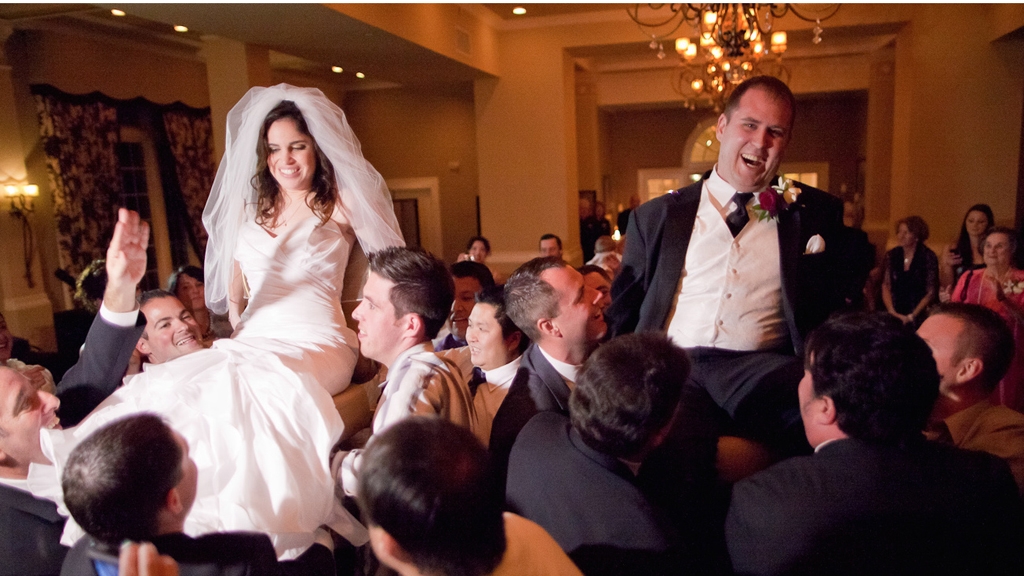
Mazel Tov! If you or someone close to you is planning a Jewish wedding, you are in the midst of an exciting — and at times stress-inducing — experience. Besides the many wedding details that all couples need to plan, Jewish brides and grooms have several other important factors connected to their ceremony to consider. Whether you are Jewishly knowledgeable or relatively new to Judaism, you may want to review the list below before you make your plans to create a meaningful Jewish wedding.
Are you planning a Jewish wedding? Let us help out! Sign up for Breaking the Glass, an email series that will help guide you to the wedding that’s right for you!
1. Choosing a Date

With your help, My Jewish Learning can provide endless opportunities for learning, connection and discovery.
Jewish weddings are traditionally prohibited on Shabbat and most holidays — including Rosh Hashanah, Yom Kippur, Passover, Shavuot, and Sukkot — and the fast days Tisha B’Av, the 10th of Tevet, the 17th of Tammuz, the Fast of Gedaliah, and the Fast of Esther. Traditionally, Jewish weddings are not held during the counting of the omer between Passover and Shavuot, although customs differ as to whether that entire seven-week stretch or just part of it is a problem. Marrying during the three weeks between the 17th of Tammuz and Tisha B’Av is also prohibited in traditional Jewish practice. Because many of these dates fall during prime wedding season (spring-summer), it’s important to check a Jewish calendar before you select a date.
And although Shabbat weddings are out, many couples choose to wed on Saturday at sundown, so that they can begin their ceremony with havdalah, marking both the end of Shabbat and the end of the time that came before their public commitment to one another. Some couples choose to wed on Tuesdays, believing it to be an especially blessed day, since in the Biblical story of creation, the phrase “God saw that it was good” appears twice on the third day.
2. Selecting an Officiant

For some couples, this step is an easy one. They may be active members of a congregation or have a childhood or Hillel (college) rabbi that they are still close to. But for many engaged couples who are not affiliated with a Jewish community in a formal way, finding a rabbi or cantor to lead their wedding ceremony is a daunting task. Parents may suggest using the rabbi from their congregation, whether or not the couple knows them.
First off, it’s important to know that a rabbi is not the only person who can lead a Jewish wedding. A cantor can officiate, as can another educated professional serving the Jewish community. Increasingly, couples are asking friends to officiate by becoming ordained as a Universal Life Minister. To meet most states’ requirements, the officiant does need to be a recognized member of the clergy; be sure to ask this question of any clergy you speak with.
You may want to begin the search for your rabbi by visiting local congregations and observing how different rabbis lead services. You can also contact rabbinical schools to connect with a student rabbi, whose work will be supervised by an experienced faculty member. Students are eager to gain experience and may even give you more time than a busy congregational rabbi could.
Rabbis’ schedules fill up quickly, so if you have a particular rabbi in mind, be sure to clear the date with him or her as soon as possible. Interfaith couples who encounter difficulties finding a rabbi can contact Interfaithfamily.com (Officiation Request Form), or the Rabbinic Center for Research and Counseling (www.rcrconline.org), which work with interfaith couples and can help them to find a rabbi.
When you meet with rabbis you are considering, be sure to ask them their philosophy about leading weddings, if they are open to adapting rituals, and what kind of ketubah [marriage contract] text they prefer that couples use. You want to make sure that you are on the same page about major issues from the start.
3. Planning the Ceremony
Even couples who grew up in a Jewish home with years of Jewish education may find themselves surprised when it comes to examining traditional Jewish wedding rituals. For example, in a traditional ceremony, only the groom gives the bride a ring, an act which is thought to symbolize kinyan (acquisition).
Many contemporary egalitarian couples find this ritual to be not in keeping with their values and choose to do a double-ring ceremony; some Orthodox rabbis will allow a modified form of this. While working with a rabbi can help you learn about the wedding rituals, you will probably get more out of the experience by doing a bit of research, so you can bring ideas to your meetings with the rabbi. (See Recommended Reading.)
4. Choosing a Ketubah

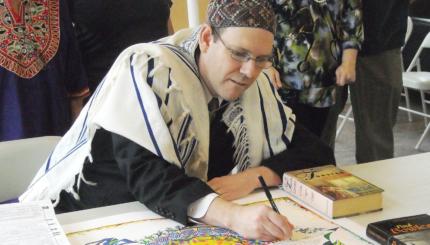
Just as our government issues a marriage license, Jewish law has historically used a ketubah to sanction a marriage. Ketubah means “writing” or “written” and refers to the document that is signed by witnesses before and often read during a Jewish wedding. Traditionally, a ketubah served as a kind of premarital contract, outlining a bride’s ongoing rights: food, clothing, and even sex should be provided during the course of the marriage. The ketubah also specified her rights in the case of her husband’s death or their divorce.
Many contemporary couples choose to veer away from the traditional ketubah text and its implications and instead choose a text that expresses their hopes and commitments for their marriage. Some couples write their own text, while others search for a text that speaks to their vision.
Historically, the ketubah is not only a legal document, but also an artistic one. Ketubot [plural of ketubah] have long been–and continue to be–an expression of Jewish creativity. So couples not only have decisions to make about the text, but also the kind of art they want for their ketubah. Some couples shop together for a lithograph; others hire an artist to create an original design.
Couples should also think about who they want to invite to sign their ketubah. Traditionally, a witness must be a religiously observant Jewish male, unrelated to the bride or groom. Reform and Reconstructionist and some Conservative rabbis accept women as witnesses, though most still prefer that the witness be Jewish.
5. Selecting a Chuppah

The chuppah is the canopy that covers the bride and groom during the wedding ceremony, creating a sacred space that is both open for all to see and private and intimate for the couple beneath it. It symbolizes their new home together, and is said to be open as was the tent of Abraham and Sarah, who were always ready to receive visitors.
In planning your wedding, think about what kind of chuppah would be special for you. Some are covered in flowers, others are made of fabric squares that friends and family decorate for the couple. The chuppah is attached to four poles, which can be free-standing or held by four people. It is considered a great honor to hold a chuppah pole, so this job should be given to people very close to the bride or groom.
6. Including Ritual Objects

Jewish weddings call for some objects that, with a little thought, can be enhanced to create special meaning for your wedding. For example, at most Jewish weddings kippot (yarmulkes) are provided for guests. Many couples have them imprinted with their name and wedding date; others knit original kippot or paint or decorate satin or felt ones to match wedding decor. Couples also need a kiddush cup for under the huppah, and some couples are creating a new tradition by using one heirloom cup from each family. And no Jewish wedding is complete without the glass for breaking at the end of the ceremony. Today’s couples are sometimes saving the pieces of their broken glass to be transformed into a new piece of Judaica, such as a mezuzah or candlesticks.
7. Making Pre-wedding Choices
One of the greatest things about Jewish weddings is that the celebration is spread out over time, giving you maximum time to honor bride and groom. The celebration may begin with an aufruf, when bride and groom (in traditional circles, only groom) are called to the Torah for an aliyah. They receive a mi shebeirakh blessing, which invokes God’s blessing for the bride and groom, and then they are showered with candy, a symbol of sweetness to come in their life together. Many couples host a kiddush lunch following services. This can be an ideal time to include the entire community in your wedding joy.
You and your partner should also discuss whether you want to include various traditional pre-wedding rituals such as going to the mikvah (ritual bath), separating from one another during the week before your wedding, and fasting on your wedding day. These rituals can help the couple prepare spiritually for the seriousness of the day to come. While a Jewish wedding is full of joy, it is also like a personal Yom Kippur for the bride and groom, who want to enter their marriage with a pure heart. Many couples choose to follow an altered version of some of these traditions, such as eating something light before the ceremony to protect against fainting.
You and your partner should give yourselves ample time to talk through each of these seven steps, and to use the process of planning your wedding as an opportunity to learn more about Jewish tradition and the way each of you envisions your life together once you step out from under the chuppah, hand in hand.
chuppah
Pronounced: KHOOP-uh or khoo-PAH, Origin: Hebrew, canopy under which a Jewish wedding ceremony takes place.
ketubah
Pronounced: kuh-TOO-buh, Origin: Hebrew, the Jewish wedding contract.
Shabbat
Pronounced: shuh-BAHT or shah-BAHT, Origin: Hebrew, the Sabbath, from sundown Friday to sundown Saturday.
Sukkot
Pronounced: sue-KOTE, or SOOH-kuss (oo as in book), Origin: Hebrew, a harvest festival in which Jews eat inside temporary huts, falls in the Jewish month of Tishrei, which usually coincides with September or October.
Tammuz
Pronounced: tah-MOOZ (oo as in boot), Origin: Hebrew, Jewish month that usually coincides with June or July.
Torah
Pronunced: TORE-uh, Origin: Hebrew, the Five Books of Moses.
Yom Kippur
Pronounced: yohm KIPP-er, also yohm kee-PORE, Origin: Hebrew, The Day of Atonement, the holiest day on the Jewish calendar and, with Rosh Hashanah, one of the High Holidays.