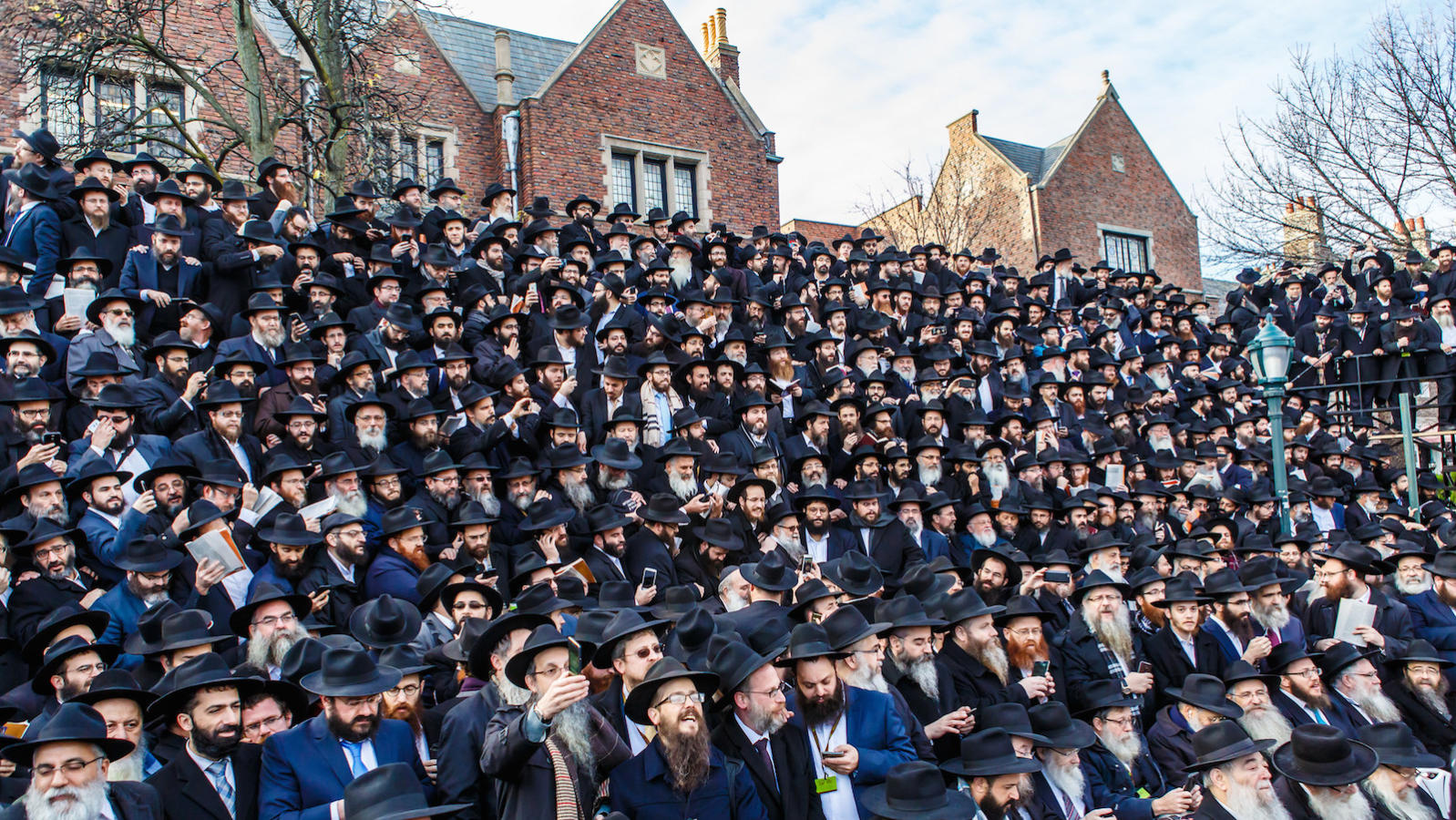
Chabad is an Orthodox Hasidic sect based in Brooklyn, New York. It is also sometimes known as Lubavitch (or Chabad-Lubavitch) after the town in Russia where the movement was centered for much of the 19th century.
Though not numerically the largest Hasidic group in the world, it is by far the best-known and the most visible thanks to decades of outreach work seeking to bring non-religious Jews closer to their faith. Chabad is unique among Hasidic groups for its eagerness to engage with the broader Jewish community, its embrace of modern technology and communications tools to spread its message, and its global presence. From Memphis to Mumbai, Bangkok to Boston, there is scarcely a major city on the planet that does not have a permanent Chabad presence.
Chabad’s influence is largely the product of the efforts of nearly 5,000 Chabad outreach professionals — known as shluchim, or emissaries — that operate some 3,500 Chabad institutions in 100 countries and all 50 U.S. states. Typically, the shluchim are a married couple that live in and operate a “Chabad house,” offering meals, classes, prayer services and (depending on the location) tourist services. In some countries, Chabad is the only organized Jewish presence.
Chabad is also an active presence at American colleges and universities, operating close to 300 Chabad on Campus centers providing services to Jewish students. The group is highly visible on the internet, operating (among other websites) Chabad.org, which claims to get 52 million visitors annually. It runs one of the largest Orthodox publishing houses in the United States, an international youth group, and a worldwide network of dozens of yeshivas. The Jewish community federations in Russia and the former Soviet bloc are both run by Chabad emissaries. And what is reputed to be the largest Passover Seder in the world is organized each year in Nepal by a Chabad emissary.
With your help, My Jewish Learning can provide endless opportunities for learning, connection and discovery.
History and Philosophy
Chabad was established in 1775 in what is now Belarus by Rabbi Shneur Zalman of Liadi (also known as the Alter Rebbe), who also authored the Tanya, the principal work of Chabad philosophy, first published in 1796. Shneur Zalman was a disciple of Dov Ber of Mezeritch (also known as the Maggid of Mezeritch), who was in turn the chief disciple of the Baal Shem Tov, the founder of the Hasidic movement.
Shneur Zalman was a prodigy, reportedly writing a Torah commentary by the age of 8 and earning the title rabbi by age 12. He also brought a rationalist talmudic lens to the mystically oriented practices of Hasidism, earning Chabad a reputation as the most philosophical of the Hasidic groups. The name Chabad is an acronym, coined by Shneur Zalman, that stands for the three components of the intellect — chochmah (wisdom), binah (understanding) and da’at (knowledge). (These are also the three highest sefirot, or divine emanations, in the kabbalistic tree of life.) While Hasidism emerged in reaction to what was seen as an overly scholarly, yeshiva-centric form of Judaism, Shneur Zalman taught that the heart must remain subordinate to the mind. Moach shalit al halev, in the words of the Tanya: The mind is sovereign over the heart.
On the whole, Chabad practices are generally consistent with those of the wider Orthodox world, but the group does have some unique practices. Unlike other Hasidic groups, Chabad men wear fedoras; other Hasidic groups typically wear some kind of fur-lined hat. Chabad men also have a custom of donning two pairs of tefillin each morning (most Jews who pray with tefillin only wear one), reflecting a divergence of opinion in medieval times about the order of the texts placed inside the wooden tefillin boxes. And Chabad observes a number of unique holidays, generally connected to important dates in the lives of previous movement leaders.
After Shneur Zalman’s death, leadership passed to his son, Dovber Schneuri, who moved the Chabad seat to the town of Lyubavichi, today located in western Russia not far from the border with Belarus. The movement would be centered there for about a century, until Dovber’s great-great-grandson, Sholom Dovber Schneersohn, the movement’s fifth leader, moved to the port city of Rostov-on-Don in 1915. After his death in 1920, his only son, Yosef Yitzchak Schneersohn, became the movement’s sixth leader.
Schneersohn’s tenure coincided with the early years after the Bolshevik revolution, as the communist leadership enforced an official state atheism that made life difficult for the Jewish community. Schneersohn was arrested and imprisoned for counter-revolutionary activities and eventually forced to leave Russia, living for a time in Latvia and in Poland before arriving in the United States in 1940. He died in Brooklyn a decade later.
The Rebbe
It was under Yosef Yitzchak’s son-in-law and successor, Menachem Mendel Schneerson, that the movement grew from an insular Hasidic sect into the massively influential Jewish force that it is today, in the process burnishing his reputation as one of the most important Jewish figures of the 20th century and arguably the most widely recognized rabbi in modern history.
Born in 1902 in what is now Ukraine, Schneerson — universally referred to by his followers simply as “the rebbe” — was recognized as a gifted scholar from a young age. In 1928, he married one of Yosef Yitzchak’s daughters, Chaya Mushka (they were distant cousins), and moved to Germany, where he studied at the University of Berlin. After the rise of the Nazis, Schneerson fled to Paris, where he continued his secular education at the Sorbonne. He arrived in the United States in 1941 and worked for a time as an engineer at the Brooklyn Navy Yard.
After his father-in-law’s death in 1950, Schneerson reluctantly assumed leadership of the movement. Schneerson indicated the direction the movement would take under his leadership at his first talk as rebbe, telling his followers that “one must go to a place where nothing is known of godliness, nothing is known of Judaism, nothing is even known of the Hebrew alphabet, and while there to put oneself aside and ensure that the other calls out to God.”
Schneerson saw high rates of Jewish intermarriage and assimilation as a kind of spiritual Holocaust. Bringing Jews closer to their heritage and the performance of biblical commandments, he taught, would hasten the coming of the messiah. And while his efforts were focused on Jews, they were not limited to them: Schneerson also enjoined his followers to encourage observance of the 7 Noahide laws, the universal moral obligations Judaism teaches are incumbent upon all of humanity.
The first Chabad emissary was dispatched by Yosef Yitzchak to Morocco in 1950, but under his successor Chabad’s outreach network came to span the globe. Schneerson was an early pioneer of outreach to less identified Jews (known as kiruv). Under his leadership, the group would convert countless campervans into so-called “mitzvah tanks” that served as mobile outreach centers, turn to the telephone — and later satellite television and the internet — to spread its religious message, and launch countless affiliated organizations, including yeshivas, drug treatment centers, a worldwide children’s group, and a major Jewish publishing house. In 1978, his birthday — 11 Nissan on the Jewish calendar — was designated by the U.S. Congress as Education Day U.S.A. (now Education & Sharing Day, USA) in recognition of Schneerson’s commitment to education.
Schneerson was fluent in English, Yiddish, Russian, French, German and Hebrew. For years, he spent hours every Sunday doling out dollar bills to thousands who would line up for the privilege of receiving one, asking only that the money be donated to charity. He was frequently visited by foreign heads of state and visiting dignitaries. In 1994, he was posthumously awarded the Congressional Gold Medal, the only rabbi and at the time only the second clergyman to receive it in over 200 years.
Schneerson spoke endlessly about hastening the arrival of the messiah (moshiach, in Hebrew) through the performance of the commandments. Under his leadership, “We want moshiach now” became a Chabad slogan. Some of Schneerson’s followers reportedly began to believe he might be the redeemer himself as early as the 1980s, but after the rabbi suffered a paralyzing stroke in 1993 that left him unable to speak, the belief gained traction. Posters welcoming “king messiah” and bearing Schneerson’s face began appearing in Israel and Brooklyn. Yechi adoneinu moreinu v’rabbeinu melech hamoshiach lolam vaed — long live our master, our teacher, and our rabbi, the king messiah, for eternity — became an anthem in Chabad communities around the world.
Some in the leadership sought to quash this enthusiasm, but on Sunday, Jan. 31, 1993, the news media were summoned to Chabad headquarters in Brooklyn with the promise that the rebbe would finally reveal himself as the messiah. This belief persisted among some segment of the Chabad community even after Schneerson died in 1994 at the age of 92, leading some to suggest that Chabad was morphing into a community of heretics who held to a doctrine categorically rejected by Jewish law. Over time, the controversy subsided, as the mainstream of the movement moved decidedly away from such talk.
The Rebbe’s Army
Schneerson died childless and did not designate a successor, leaving the movement without a leader. He remains the movement’s guiding light to this day, his photograph ubiquitous in the homes of his adherents across the world. And in the decades after his death, Chabad’s worldwide expansion continued apace.
Between 1994 and 2002, more than 610 new emissaries were dispatched and 705 new Chabad institutions opened, according to journalist Sue Fishkoff’s book The Rebbe’s Army. In that same period, Chabad’s presence in the former Soviet bloc grew from eight Russian cities to 61 across the region. In the year 2000, Fishokoff reported, 51 new Chabad facilities were established in California alone. Chabad’s campus network is active at 500 universities, 284 of them with permanent representation, in the United States and abroad.
As of 2021, Chabad claimed 4,900 emissary families operating 3,500 institutions in 100 countries and territories. Chabad operates not only in major urban areas, but even in smaller cities and rural areas. In some places, Chabad exists primarily to cater to the needs of Jewish travelers. Nothing in the Jewish world compares to this kind of reach, which has made Chabad in many places in the world the face of modern Judaism.
The most well-known Chabad institution is the Chabad House, which is often where the emissary couple lives and runs religious programming. Chabad Houses are renowned for their warm atmosphere and low barriers to entry — there are no membership fees and the group does not charge for High Holiday services, as is common in American synagogues. Each Chabad outpost is locally funded. In 2018, a spokesperson for Chabad estimated that the movement collectively raises $1-2 billion annually.
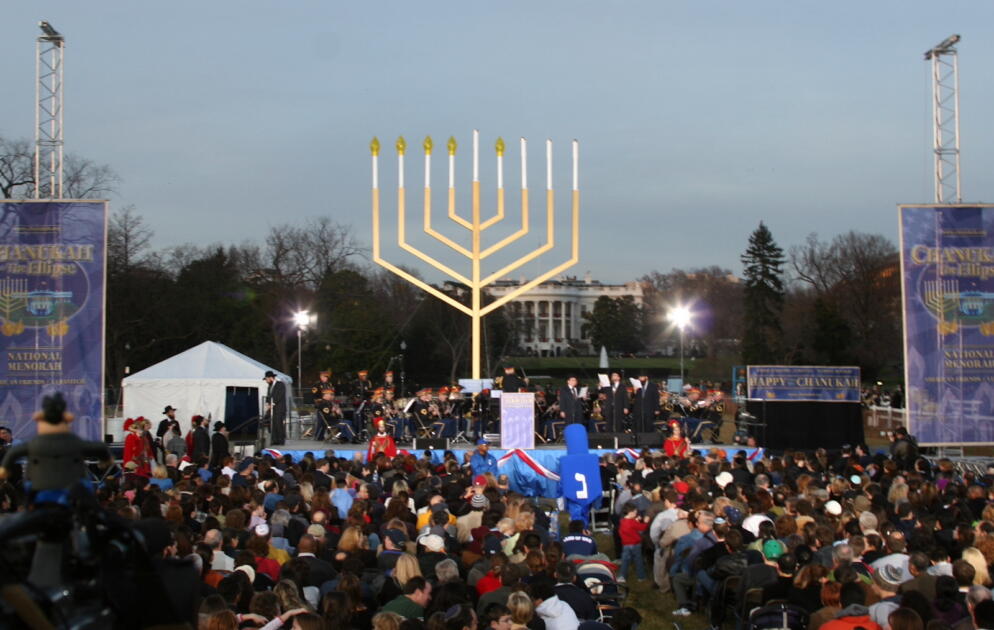
Chabad also operates more than 1,000 schools, kindergartens and other educational institutions. It runs over a dozen soup kitchens in Israel. The Aleph Institute, a Chabad organization founded in 1981, provides chaplaincy services to American Jewish prisoners and their families, including High Holiday services in prisons. Chabad is responsible for the placement of thousands of large menorahs in public places around the world on the holiday of Hanukkah. And Chabad adherents are frequently found on the streets of major cities asking passersby if they are Jewish. (If the answer is yes, men are encouraged to put on tefillin and the women are given Shabbat candles to light.)
Each fall, thousands of Chabad emissaries from around the world gather in New York for their annual multi-day conference, known as the International Conference of Shluchim. A highlight is the annual class photo, in which conference participants are photographed in front of the movement’s Brooklyn headquarters at 770 Eastern Parkway. A slideshow on the conference website illustrates the movement’s growth since the first conference in 1984. A separate conference for female emissaries is held each year in February.
“In the end, no one should discount Chabad’s impact on the American and global Jewish scene,” the Jewish studies professor Steven Windmueller has written. “It represents a unique and significant presence. At best, organizations may seek to emulate certain elements associated with Chabad’s methodology of outreach and engagement. However, it is unlikely that other groups within the Jewish community have the capacity or commitment to enter the marketplace to construct a competing model of service or religious activism.”
Chabad-Lubavitch
Pronounced: khuh-BAHD loo-BUV-itch (oo as in boot), Hasidic sect known for its outreach to the larger Jewish community.
Hasidic
Pronounced: khah-SID-ik, Origin: Hebrew, a stream within ultra-Orthodox Judaism that grew out of an 18th-century mystical revival movement.
Torah
Pronunced: TORE-uh, Origin: Hebrew, the Five Books of Moses.