Download a printable version of the lyrics in Hebrew, English and transliterated Hebrew here.
In 1897, at the First Zionist Congress in Basel, Switzerland, the delegates joined in a rousing rendition of the song “Hatikvah.” The beloved Zionist hymn would come to be known among generations of Jews around the world as the Jewish national anthem. Yet it was not until 2004 that the Israeli government officially designated “Hatikvah” as the country’s national anthem. Between these two facts lies the curious tale of one of the most important songs in modern Jewish history.
From a Poem to a Song
“Hatikvah” began its life as a nine-stanza Hebrew poem entitled “Tikvatenu” (“Our Hope”). Its author was a colorful 19th-century Hebrew poet, Naftali Hertz Imber (1856-1909), who hailed from Złoczów, a town in Austro-Hungarian Galicia. Inspired by the Hibbat Zion movement of early Zionism, Imber originally wrote the poem in 1878 while living in Jassy (Yash), Romania.
As a young man, Imber wandered Eastern Europe for several years before settling in Ottoman Palestine in 1882. There he worked as personal secretary and Hebrew tutor to Sir Laurence Oliphant (1829-1888), an eccentric British author, politician, world traveler, and Christian Zionist. In the 1880s, Oliphant’s mystical religious beliefs inspired him to launch various philanthropic efforts to encourage Jewish resettlement in the historic Land of Israel. Imber first published “Tikvatenu” in an 1886 collection of his poetry, “Barkai,” (Morning Star), issued in Jerusalem and dedicated to Oliphant.
By the time Imber left Palestine in 1888, his poem had become a song (soon renamed “Hatikvah,” Hebrew for “The Hope”) thanks to the early Zionist pioneers in the Jewish farming community of Rishon-le-Zion. The melody arrived courtesy of a Romanian Jewish immigrant named Samuel Cohen, who adapted it from a Moldavian folk song, “Carul cu Boi” (Cart and Oxen). “Hatikvah” spread rapidly among Jewish pioneers as part of the new culture of secular Hebrew songs and folk dances (such as the hora)that existed in the early decades of the Zionist movement.
With your help, My Jewish Learning can provide endless opportunities for learning, connection and discovery.
Herzl’s Problem With “Hatikvah”
Even as it grew in popularity, however, not all Zionists favored “Hatikvah” for the movement’s anthem. Theodor Herzl disliked the song, and in 1897 he launched the first of several international competitions, all ultimately unsuccessful, to produce a serious alternative.
One of Herzl’s objections to “Hatikvah” was the bohemian figure of Imber himself. Despite his personal charisma, literary talents, and Zionist convictions, Imber was a perpetual ne’er-do-well, described by one contemporary as “a vagabond, a drunkard and a Hebrew poet.” In fact, after leaving Palestine, Imber lived in London and Boston, before dying of alcoholism in abject poverty on New York’s Lower East Side in 1909, despite repeated efforts by Jewish communal leaders to help him.
READ: An Introduction to Zionism
For other early Zionists, it was not the author of “Hatikvah” but the non-Jewish origin of its melody that proved objectionable. Many Zionist cultural figures were unnerved by the song’s strong resemblance to Czech composer Bedřich Smetana’s “Moldau” section of his 1874 symphonic tone poem, “MáVlast.” In fact, in creating his own national musical epic for the Czech nation, Smetana had drawn on the same Moldavian song as a source around the same time that Samuel Cohen did. As a solution, some Jewish composers wrote new melodies for Imber’s words.
Scholars joined the fray as well, with some postulating that the “Hatikvah” melody actually derived from the traditional Hallel liturgy of Sephardic Jews. The early 20th-century scholar Abraham Zvi Idelsohn, “father of Jewish musicology,” took a different route, arguing that Hatikvah’s root melody belonged to no one folk song tradition. Instead, he claimed, it constituted a generic “wandering melody,” common across European cultures without a distinct national paternity.
Recent scholarship has elaborated on this idea, isolating a centuries-old melodic pattern common to many Central European songs, the most famous of which is Mozart’s “Twinkle, Twinkle, Little Star.” Of course, “Hatikvah” is far from unique as a national anthem in sharing its melody with other “foreign” sources. For instance, the tune of “God Save the Queen” served at various times as national anthem of Australia, Canada, Denmark, Sweden, Switzerland, Russia, the United States, and several German states, along with several other countries, past and present.
In later years, “Hatikvah” continued to be a subject of debate. Religious Zionists frequently objected to the putatively secular character of its lyrics, which do not mention God. As a result, Rabbi Abraham Isaac Kook composed a parallel poem, “Ha-emunah” (“The Faith”), which speaks of the “steadfast faith in the return to our holy land…where we shall serve our God.” Ironically, socialist Zionists denounced the poem for its allegedly religious, messianic overtones, owing to the reference to an ancient biblical promise of Jewish return. In the 1930s, they instead proposed Hayim Nahman Bialik’s “Birkat ha-am” (“The People’s Blessing”), also known as “Tehezakna,” for its line, “Strengthen the hands of our brothers renewing the soil of our land…” Cultural Zionists voiced their objections as well, often criticizing the minor-key melody as gloomy and depressing, and castigating Imber’s Hebrew style as heavy-handed and antiquated.
Hope for Hatikvah
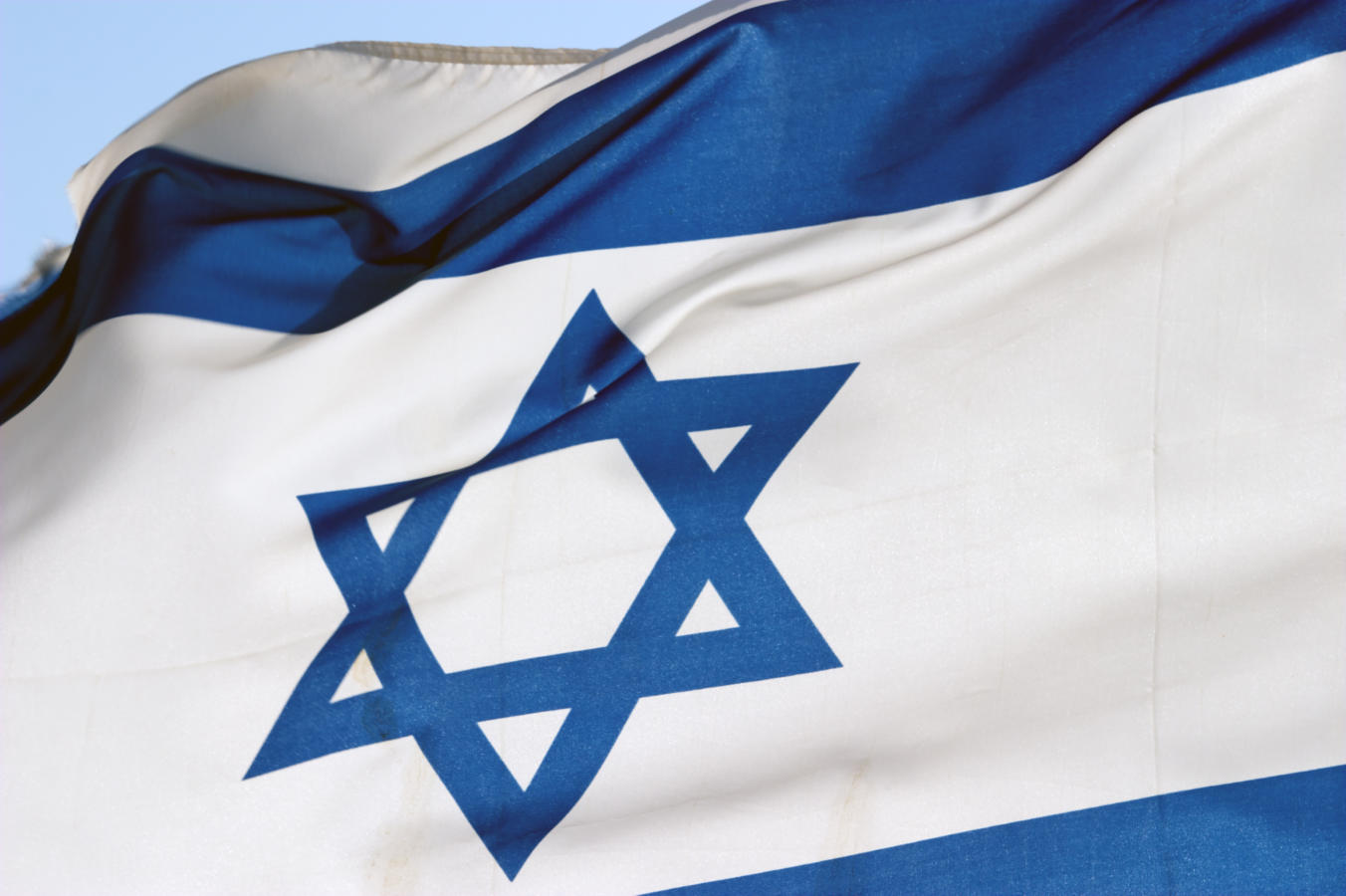
In spite of these criticisms and challenges (and in some cases because of them), most Zionists embraced “Hatikvah.” Year after year it was sung at the annual Zionist congresses and other political events around the world. In 1933, at the 18th Zionist Congress, the song was officially adopted as the movement’s anthem together with the now-familiar blue and white flag. In the 1940s, many Jews in Europe defiantly sung the song as a gesture of collective hope and spiritual resistance in the face of the Nazi Holocaust and Stalinist terror.
Yet after the creation of the State of Israel in 1948, the government declined to recognize “Hatikvah” as the official state anthem, despite adopting a new flag and coat of arms as national symbols. Still, “Hatikvah” was openly promoted as the de facto national anthem and used at all official state occasions.
The traditional lyrics were also emended to reflect the new historic reality of statehood. Whereas the original last three lines of the text speak of “the ancient hope to return to the land of our fathers, to the city where [King] David dwelt,” the new version replaces the biblical allusion with an emphasis on “the hope of two millennia to be a free people in our land, the land of Zion and Jerusalem.”
Almost from the moment of its creation, “Hatikvah” has served as both a beloved anthem throughout the Jewish world and a subject of political debate. The same pattern continues today. In recent years, a controversy has occasionally surfaced in Israeli politics over allegations that the lyrics are unsuitable for a country with such a sizable non-Jewish minority.
Nevertheless, “Hatikvah” remains an enduring symbol of Jewish nationhood and Israeli identity. And in November 2004, over a century after its composition, “Hatikvah” was officially designated the Israeli national anthem by the Israeli Knesset, bringing its journey full circle.
Lyrics in Transliteration and English
The present-day version of “Hatikvah” is a two-stanza song, whose words speak of the historic yearning of Jews for a return to the ancient national home in the Land of Israel. Find Hebrew text of the lyrics here.
Kol od baleivav penimah
Nefesh yehudi homiyah,
Ulfa’atey mizrah kadimah,
Ayin letsiyon tsofiyah;
Od lo avdah tikvateinu,
Hatikvah bat shenot al payim,
Lihyot am hofshi be’artzeinu,
Eretz tziyon veyerushalayim.
As long as Jewish spirit
Yearns deep in the heart,
With eyes turned East,
Looking towards Zion.
Our hope is not yet lost,
The hope of two millennia,
To be a free people in our land,
The land of Zion and Jerusalem.
Sephardic
Pronounced: seh-FAR-dik, Origin: Hebrew, describing Jews descending from the Jews of Spain.