The sources delineate the minimum requirements of the mitzvot [commandments]. A sukkah must have certain dimensions and must be constructed in a particular manner. The cup for Kiddush must be large enough to hold a specified minimum amount of wine. While some may be satisfied with minimum standards, the Jewish tradition recognizes and encourages the addition of an aesthetic dimension.
READ: My Obsession With Buying Abandoned Jewish Objects
Beauty enhances the mitzvot by appealing to the senses. Beautiful sounds and agreeable fragrances, tastes, textures, colors, and artistry contribute to human enjoyment of religious acts, and beauty itself takes on a religious dimension. The principle of enhancing a mitzvah through aesthetics is called Hiddur Mitzvah.
The concept of hiddur mitzvah is derived from Rabbi Ishmael’s comment on the verse, “This is my God and I will glorify Him” (Exodus 15:2):
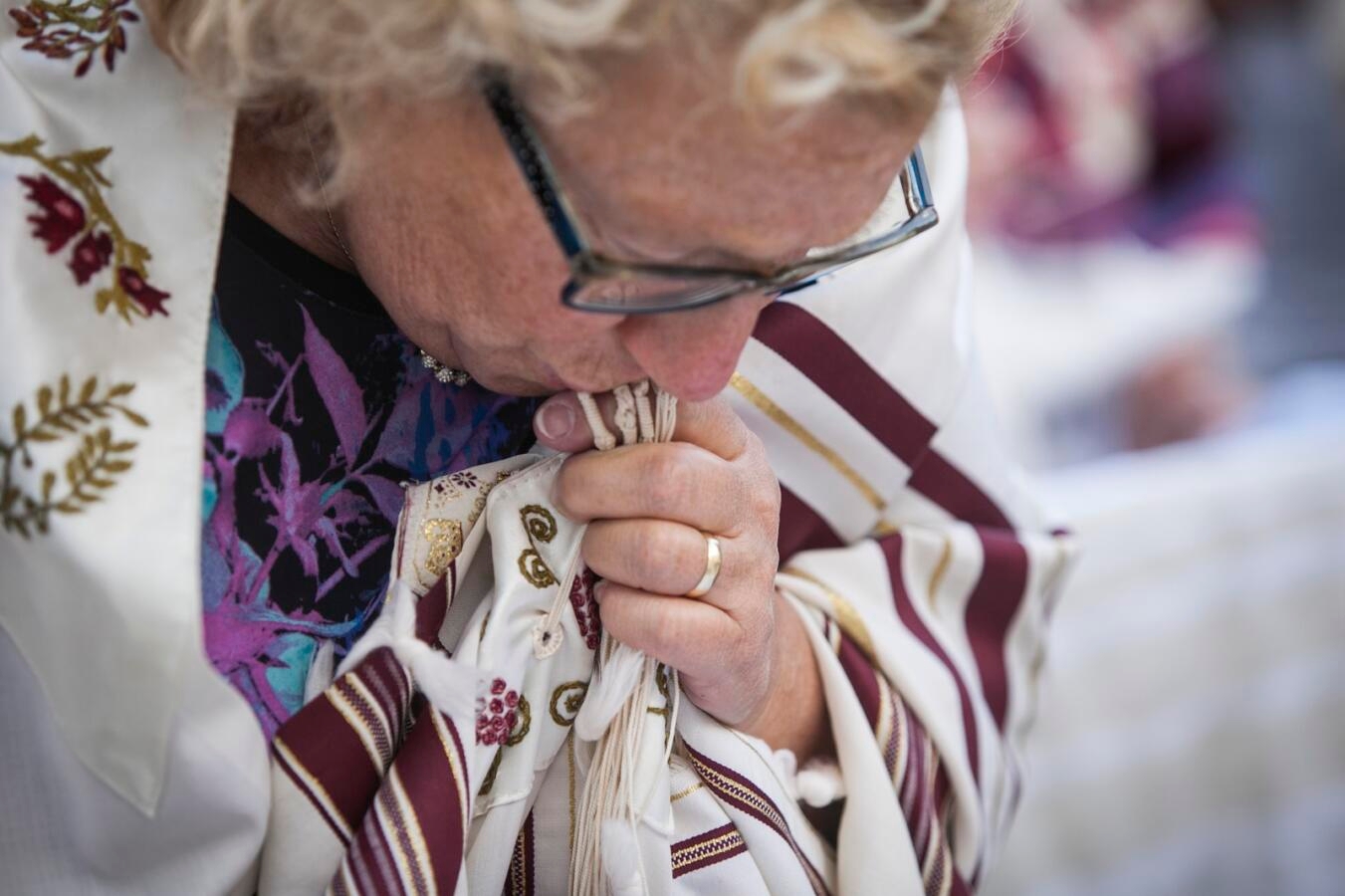
“Is it possible for a human being to add glory to his Creator? What this really means is: I shall glorify Him in the way I perform mitzvot. I shall prepare before Him a beautiful lulav, beautiful sukkah, beautiful fringes (tzitzit), and beautiful phylacteries (Tefillin).” [Midrash Mechilta, Shirata, chapter 3, ed. Lauterbach, p. 25.]
The Talmud [Shabbat 133b] adds to this list a beautiful Shofar and a beautiful Torah scroll which has been written by a skilled scribe with fine ink and fine pen and wrapped in beautiful silks.
“In keeping with the principle of hiddur mitzvah,” Rabbi Zera taught [Bava Kama 9b], “one should be willing to pay even one third more [than the normal price].” Jewish folklore is replete with stories about Jews of modest circumstances paying more than they could afford for the most beautiful etrog to enhance their observance of Sukkot, or for the most delectable foods to enhance their observance of Shabbat.

The Midrash suggests that not only are mitzvot enhanced by an aesthetic dimension but so is the Jew who observes it:
You are beautiful, my love, you are beautiful, through mitzvot . . . beautiful through mitzvot, beautiful through deeds of loving kindness, . . . through prayer, through reciting the “Shema,” through the mezuzah, through phylacteries, through Sukkah and lulav and etrog… [Midrash Song of Songs Rabbah 1.15].
There seems to be reciprocity of beauty through the agency of mitzvot: the Jew becomes beautiful as he/she performs a mitzvah. “But, conversely, Israel ‘beautifies’ God by performing the commandments in the most ‘beautiful’ manner…”
There are many ways to apply the principle of hiddur mitzvah. For example, one might choose to observe the mitzvah of kindling Hanukkah lights with a cheap, stamped tin Hanukkiyah (Hanukkah menorah) or one might make an effort to build one by hand or to buy a beautiful one. Some families might prefer an oil-burning Hanukkiyah, rather than one that uses the standard candles, in order to relate their observance of the mitzvah more closely to the times of the Maccabees, Certainly the mitzvah of lighting Hanukkah candles is fulfilled with any kind of Hanukkiyah, but by applying the principle of hiddur mitzvah, one enriches both the mitzvah and him/herself.

Various companies distribute free Haggadot (the plural of Haggadah, the Passover seder guide) to their customers before Passover. These Haggadot generally contain the entire traditional text and of course may be used at the family seder. But a family who is motivated by the concept of hiddur mitzvah will want to use one of the beautifully edited and illustrated Haggadot readily available today. Similarly, beautiful matzah covers, seder plates, and Kiddush cups should be used. These may be family heirlooms, or ones created by contemporary artists, or ones designed and executed by the children in religious school. The whole celebration is enriched when care is taken in the selection or creation of ceremonial objects.
Hiddur mitzvah means taking the time and making an effort to create or acquire the most beautiful ceremonial objects possible in order to enrich the religious observance with aesthetic dimension.
Excerpted from “Hiddur Mitzvah: The Aesthetics of Mitzvot.” Reprinted with permission from Gates of the Seasons: A Guide to the Jewish Year (Central Conference of American Rabbis).
etrog
Pronounced: ETT-rahg, Origin: Hebrew, a citron, or large yellow citrus fruit that is one of four species (the others are willow, myrtle and palm) shaken together as a ritual during the holiday of Sukkot.
Havdalah
Pronounced: hahv-DAHL-uh, Origin: Hebrew, From the root for “to separate,” the ceremony marking the end of Shabbat and the beginning of the week.
Kiddush
Pronounced: KID-ush, Origin: Hebrew, literally holiness, the blessing said over wine or grape juice to sanctify Shabbat and holiday.
lulav
Pronounced: LOO-lahv (oo as in boo), Origin: Hebrew, a bundle of branches representing three species — willow, myrtle and palm — which are shaken together with the etrog on Sukkot.
menorah
Pronounced: muh-NOHR-uh, Origin: Hebrew, a lamp or candelabra, often used to refer to the Hanukkah menorah, or Hanukkiah.
Midrash
Pronounced: MIDD-rash, Origin: Hebrew, the process of interpretation by which the rabbis filled in “gaps” found in the Torah.
mitzvah
Pronounced: MITZ-vuh or meetz-VAH, Origin: Hebrew, commandment, also used to mean good deed.
seder
Pronounced: SAY-der, Origin: Hebrew, literally “order”; usually used to describe the ceremonial meal and telling of the Passover story on the first two nights of Passover. (In Israel, Jews have a seder only on the first night of Passover.)
sukkah
Pronounced: SOO-kah (oo as in book) or sue-KAH, Origin: Hebrew, the temporary hut built during the Harvest holiday of Sukkot.
Talmud
Pronounced: TALL-mud, Origin: Hebrew, the set of teachings and commentaries on the Torah that form the basis for Jewish law. Comprised of the Mishnah and the Gemara, it contains the opinions of thousands of rabbis from different periods in Jewish history.
Torah
Pronunced: TORE-uh, Origin: Hebrew, the Five Books of Moses.