In 2006, the Committee on Jewish Law and Standards of the Conservative Rabbinical Assembly completed its deliberation regarding ordination of gay men and lesbians and same-sex commitment ceremonies, endorsing teshuvot (papers) both reaffirming the status quo and affirming change. The result of the committee’s vote means that rabbis, synagogues, and other Conservative institutions may choose to perform same-sex weddings and hire openly gay or lesbian clergy, but they do not have to. Below, Rabbi Daniel Nevins reflects on his part in this process.
For the past four years, I have spent many of my spare hours reading the voluminous literature on what Judaism has to say about homosexuality. The early record is quite clear and literally forbidding. For two men to lie together like the “lyings of a woman” (understood in the Talmud to mean anal sex), is called “abhorrent” by the Torah, and prohibited under penalty of death (Leviticus 18:22). Rabbinic law greatly expanded upon this prohibition, banning other forms of sexual intimacy between men, and also sexual intimacy between women.
This much is clear. Less obvious was what the Torah, and then the Talmud, expected of homosexuals. The tradition seems to assume that this ban would lead them back into heterosexual marriages, and indeed, for centuries many gay and lesbian people have done just that.
Contemporary Questions
In recent decades, we have learned a great deal about sexual orientation, though much more remains unknown. We do not know why some people develop a heterosexual orientation, why others are attracted only to those of the same sex, and why yet others are attracted to men and women.
What we do know is that there is no effective way for most people who are homosexual to become heterosexual. Those who try often “fail” this ill-advised therapy, resulting in depression and suicidal thinking, as well as anguish for their spouses and children. Does Judaism have anything to say to this state of affairs?
That was the real question behind the Conservative Movement’s recent four-year process of study and debate on the subject of homosexuality and halakhah (Jewish law).
Past Conservative Policy
In 1992, when I was still in rabbinical school at JTS, the Committee on Jewish Law and Standards of the Rabbinical Assembly (CJLS) debated the subject and emerged with a consensus statement that was self-contradictory. It proclaimed a broad welcome for gay and lesbian Jews, but denied recognition of their committed relationships, their ordination as clergy, and even their functioning in other “leadership roles.”
If this was a welcome, it was hardly warm. Many gay and lesbian Jews, as well as their family and friends, advocated for a more inclusive policy. Eventually the president of the United Synagogue of Conservative Judaism, Judy Yudoff, addressed a letter to Rabbi Kassel Abelson, chairman of the CJLS, asking if any change in policy could be considered. He agreed to reopen the subject, leading to a four year process of retreats, research, debates, and ultimately the votes of December 6, 2006.
The Deliberating Process
While there was principled disagreement regarding matters of textual interpretation, legal philosophy, and practical law, there was also a deep sense of collegiality and appreciation for the good faith efforts being made by each of the committee’s 25 voting members and six non-voting members. At the outset it is important to emphasize that none of the committee members uttered anything like animus toward gay or lesbian Jews in the entire four years of proceedings.
On the contrary, even those most opposed to halakhic change framed their arguments with respect and sympathy for the predicament that gay and lesbian Jews face. One rabbi who voted for retaining the status quo spoke about his own daughter’s coming out as a lesbian, and now as a transgendered man. This rabbi loves and respects his daughter/son, but feels that the halakhah itself cannot change in this dramatic fashion.
At the first CJLS retreat on this subject, in March 2004, we focused on our respective theories of Jewish law, and also on the current scientific understanding of sexual orientation. We heard from experts on all sides of the spectrum.
I was most impressed by the testimony of Dr. Abba Borowich, an Orthodox psychiatrist who practiced reparative therapy for Orthodox homosexuals for nearly 30 years before concluding that this was an ineffective course of therapy which only increased suffering among his patients and their families. At the end of this retreat, nine rabbis indicated that they would begin work on responsa.
The next retreat, in 2005, included discussion of the nine initial papers and their various approaches. Some of the differences related to halakhic methodology, while others related to the conclusions that would be supported by each.
Early on I realized that it would not be possible to shift halakhic policy 180 degrees from yeihareig v’al ya’avor (“die rather than transgress”) to chuppah v’kiddushin kdat Moshe v’Yisrael (“sanctified marriage by the laws of Moses and Israel”). That is, it would not be possible to go from considering male homosexual intercourse to be a cardinal prohibition requiring martyrdom to considering same sex relationships as sanctified marriages. Perhaps there was a middle ground?
The Making of a Teshuva
My “ah-hah” moment came a few years ago when I was studying daf yomi, the daily Talmud page, and came back to a passage I hadn’t thought of in this light before. In Tractate Brakhot 19b there is a discussion of human dignity–kvod habriot–and its legal implications.
As I looked up parallel sources and then later applications of this concept in halakhic sources, I realized that this might be the key to the conundrum: How to be inclusive and sensitive to human dignity, while still being authentically halakhic?
For me, this dilemma has always been a matter of dignity. It is forbidden to humiliate another person, and yet our policy on homosexuality is clearly humiliating. It is commanded to love our fellow person and to dignify him or her. How was this possible given our precedent?
A paper by our colleague in Israel, Rabbi Simchah Roth, argued persuasively that the varied prohibitions on male and female homosexual relations could be separated into biblical and rabbinic categories. What I didn’t get from Rabbi Simchah Roth was an understanding of how one might permit gay and lesbian Jews to violate a rabbinic precept. After all, we are not biblical Jews, but rabbis!
My main insight was to apply the Talmud’s concept of “gadol kvod habriot shedocheh lo ta’aseh shebaTorah”–the principle that human dignity is so important that it can override negative commandments in the Torah–to suspend the rabbinic level prohibitions on homosexual intimacy for people whose only other option was celibacy. This means that the biblical prohibition against anal sex between men remains in effect, but other forms of intimacy between men and women are permitted.
I realized that it would be hard to construct this argument convincingly alone. Like other members of the committee, I decided to collaborate with other rabbis who had come to similar conclusions. Rabbi Elliot Dorff had done a wonderful job evaluating the social science literature on sexual orientation; Rabbi Avram Reisner had gone into great depth on talmudic texts that address various sexual activities, and also on the medieval controversies surrounding the definition of the resulting prohibitions.
The three of us agreed to combine efforts. It wasn’t easy, because we live in three different parts of the country, have very different writing styles, and approach the literature from distinctive positions. Yet all of us share a core commitment to using halakhic precedent, and also to finding a livable solution that would make an inclusive and dignified place for gay and lesbian Jews in our community.
December 2006 Decision
In the end, both our responsum and Rabbi Joel Roth’s responsum–which reiterated the comprehensive ban and called for gay celibacy–received a majority support of 13 votes. Rabbi Leonard Levy’s responsum, which accepts reparative therapy as a possibility and supports the same public policy as Rabbi Roth, attained the minimum threshold of 6 votes.
The other two papers were deemed takkanot (rabbinic legislation rather than interpretation) and did not reach the necessary threshold of 13 votes. There was a last-minute attempt to accept all the papers without prejudice, but this foundered when it became clear that none of the new papers would be considered a validated position of the CJLS, leaving only the 1992 papers in place.
Struggling with Multiple Truths
Many outsiders, and some insiders, wonder how the Conservative Movement can thrive or even survive with such a division. Most realize that we have done it before and are likely to do it again. We are a big tent movement, and we will continue to try to serve God in truth, realizing that none of us has a monopoly on God’s truth.
I note that other movements have also handled major schisms in ideology or practice. Chabad has flourished despite profound disagreement over the late Rebbe’s status as messiah. Reform has struggled mightily over the role of traditional ritual practices in contemporary life. The Orthodox world is still divided over many subjects from Zionism to the relevance of modern secular thought in traditional Jewish practice.
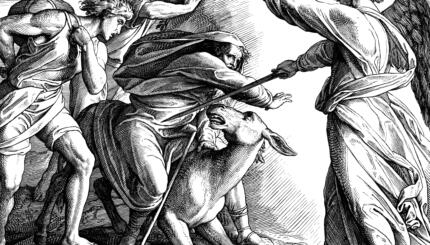
The mark of religious honesty and intensity is sometimes struggle. The people of Israel received its name as a result of Jacob’s wrestling match with the angel. “Yisrael” alludes to the periodic need to struggle with God and our fellow person, trying in the end to attain the name’s second meaning: Yashar Eil—upright, honest, and righteous before God.
At the end of the struggle we may be left limping; yet that may be the price of attaining God’s blessing.
Moshe
Pronounced: moe-SHEH, Origin: Hebrew, Moses, whom God chooses to lead the Jews out of Egypt.
Talmud
Pronounced: TALL-mud, Origin: Hebrew, the set of teachings and commentaries on the Torah that form the basis for Jewish law. Comprised of the Mishnah and the Gemara, it contains the opinions of thousands of rabbis from different periods in Jewish history.