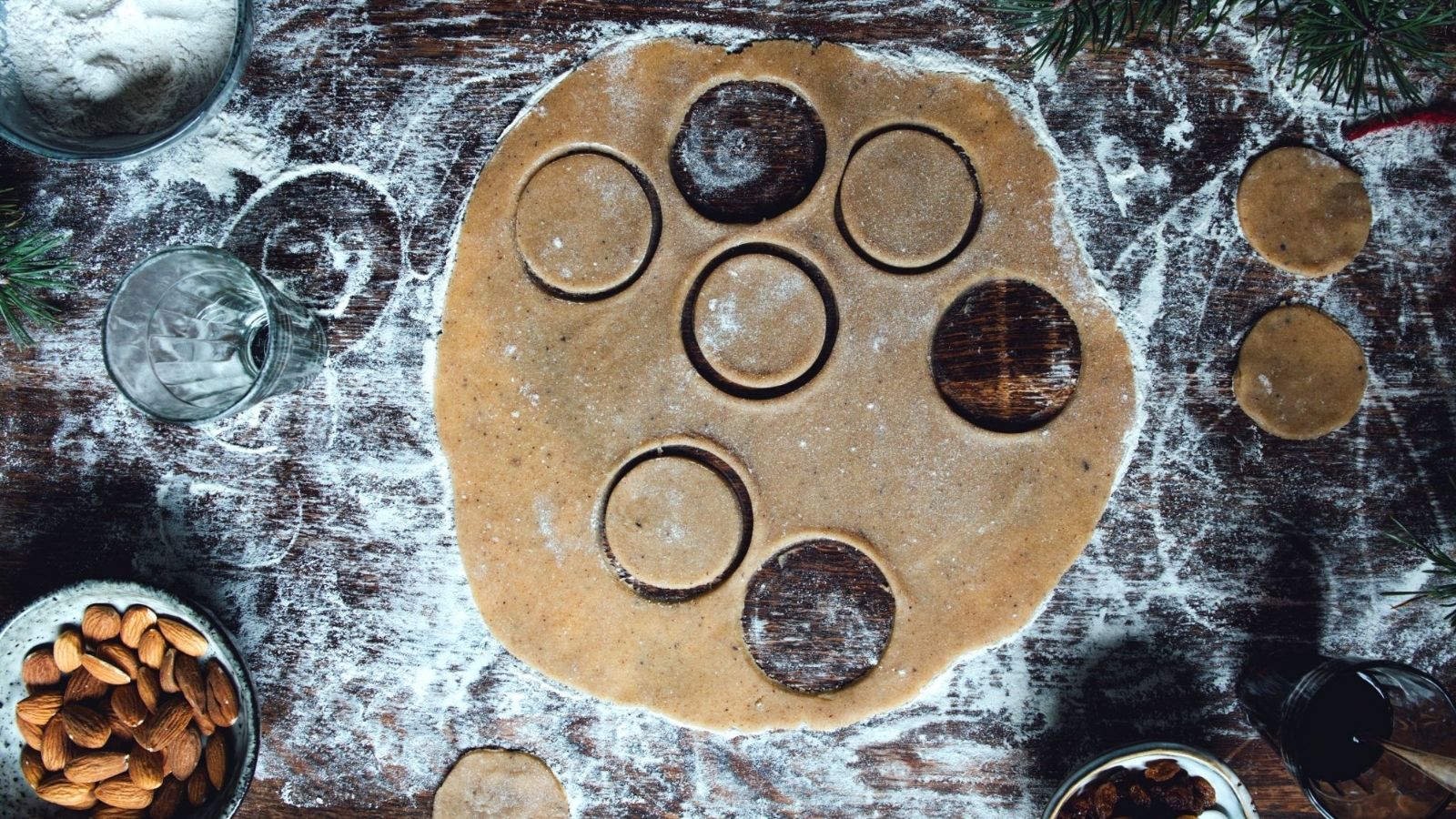
This recipe for gyðingakökur, “Jewish cookie” in Icelandic, comes from “The Culinary Saga of New Iceland, Recipes From the Shores of Lake Winnipeg” compiled by Kristin Olafson Jenkyns, a writer with forbearers from Iceland. Her book documents the history and culinary traditions of immigrants from Iceland who settled in North America at the end of the 19th century.
Read more about the fascinating history of gyðingakökur here.
Print
Icelandic Jewish Cookies
Thin, buttery cookies topped with sweet nuts.
- Total Time: 1 hour 15 minutes
Ingredients
For the dough:
- 2 1/2 cups flour
- 1/2 tsp salt
- 1 tsp ground cardamom
- 3/4 cup butter, cut into ½-inch cubes
- 1 egg
For the topping:
- 1 cup cold, strong coffee
- 1 cup blanched slivered almonds, coarsely chopped
- 1 cup crushed sugar lumps (coarse bits, not fine)
Instructions
- Stir flour, salt and cardamom together.
- Work the butter into the flour mixture by rubbing it between your fingers, as if you were making a pie crust.
- Beat egg with a fork and add to dough. Combine well. Wrap in wax paper. Chill thoroughly (at least 1 hour) until firm.
- Roll out dough on wax paper until 1/8-inch thick. Cut in 1 1/2-inch rounds with a cutter. Brush tops with coffee; mix the almonds and sugar and sprinkle generously on top. Press down gently with your hand to help the almond-sugar mixture stick. Place on greased baking sheets and bake at 350°F for about 12 minutes or until lightly golden brown.
- Prep Time: 5 minutes + 1 hour chill time
- Cook Time: 12 minutes
- Category: Dessert
- Method: Baking
Keep the flavors of Jewish food alive.
The Nosher celebrates the traditions and recipes that have brought Jews together for centuries. Donate today to keep The Nosher's stories and recipes accessible to all.


This looks promising, but have to omit the nuts, for a family member’s allergies. Any suggestions for an alternative topping?
I attempted to make the dough. Never having made a pie crust. I looked it up in another cookbook. Once I added the egg. It made very little difference in the dough. I ended up adding water in order for it to come together. Waiting for it to chill now.
Same problem here. Did adding water help?